Saturday, May 29, 2010

Dennis Hopper


What can be said about Dennis Hopper?

Nothing conventional of course. Hopper was not a conventional man, many things but never that.

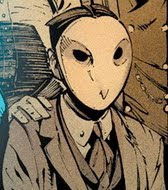
Let us be frank, Hopper gave some of the worst performances in some of the worst movies I’ve ever seen. He was in the Crow Wicked Prayer, playing a satanic gangster named El Nino, a role that required him to refer to Satan as an “OG Pimp Daddy”. He was in Firestarter 2. He was in American Carol for fuck sakes.

But it’s just this very fact that made Hopper feel so intimate. Some stars are so perfect you never feel attached. Hopper always felt like ours, we’d seen him with his pants down so to speak.

And yet, Hopper also gave some of the best performances in some of the best films I’ve ever seen. To see Hopper connect with a role is to see acting at its finest, an invisible energy that is not something as tawdry as authenticity but something truer.

One of my favorite things about Hopper is the sheer amount of work he did. Its almost impossible to keep it straight. Which means that I’m often surprised and delighted to find Hopper showing up in a piece of work I had no idea he was in. So when he shows up in Cool Hand Luke, or The Trip, or Hang Em High, or True Grit. The experience is always an uncannily friendly one. As though I’ve ran into an old friend under strange and unexpected circumstances. Coupled with the fact that I often times don’t quite recognize Hopper at first glance (The Osterman Weeknend) it becomes even stranger; because he’s older… or younger… You never know what you will see when he walks through the door.

I don’t know what it is that makes me take Hopper’s death so personal. I only know I will miss him terribly, and miss that feeling of him walking on screen. Bringing with him the instantaneous knowledge that the film I was watching was about to get a whole lot more interesting.

I’ve taken the liberty of writing up my five favorite instances where Hopper just brought it. Making the films, and the lives of the film watchers. More complete.


Rumble Fish:

Rumble Fish

“Accute perception can drive you crazy.”

This is, in my opinion Hopper’s most underrated role. Simply put without Hopper this movie doesn’t work. Coppala’s teenage melodrama, a collection of beautiful black and white shots, ridiculous poses, and dreamy elliptical dialouge relies on Hopper for its heart.

He plays his character as a grand ruin of a man. Mickey Rourke in twenty years on without the good sense to die young, all the poetry driven out of him by the world and the bottle.

It’s the way they talk, the way they connect, that makes Dillon’s performance in the film so poignant. The family that’s his that he’ll never had. He’s big, friendly, stupid Irish Setter born into a family of noble wolves. Not grand enough to even be wrecked so terribly as his family.

Hopper’s a wretch, you can nearly smell him. But he has grandeur, and the presence of mind to know how terribly he’s fallen. And in that final tracking shot, where he makes the simple act of wiping his mouth and turning away speak volumes, we watch that one last piece light left in him go out forever.


Texas Chainsaw Massacre 2

“Lord show me what I fear. So I don’t fear it no more.”

One of Hopper’s greatest gifts was his ability to simultaneously over and under play a role. I think Hooper’s wonderful mutant of a film showcases this talent best. Hooper’s film is played at level of Grand Guignol to which the term over the top does not quite cover. Hooper’s film and Hopper’s performance are both hysterically funny, but precisely because they never wink (Even the scene in which Hopper takes a few Chainsaw’s for a strenuous test drive in front of a baffled clerk is handled straight).

Hopper brings all the intenisity he can to the part, and when he marches into the Sawyer’s Lair, fearlessly singing “Bringing In The Sheaves.” He has transcended any notion of camp or kitsch, and simply become big enough for such a grand gesture to seem completely natural.


True Romance

"You know I study history."
Sure this is an obvious choice and sure its all too often appreciated for the wrong reason. But it perfectly embodies another aspect of Hopper’s talent. That ability to come in for just a fraction of the time he deserves and invest a character with enough inner life and history and weight to make him unforgettable. The way he reactions to Slater’s words like body blows briefly made Slater look like a credible actor, and that’s something nobody has ever pulled off.


Apocalypse Now


"I'm a small man."

Again Hopper acts as the glue for Coppala’s film (can you imagine his Van Helsing?) Nothing else inspires the same understanding of the stakes at hand as his performance as a man driven round the bend by Kurtz’s vision. Raising the stakes to a battle not just for Sheen’s life, but his soul and sanity as well. For all the vision and startling images and moments in the last third of that film it’s those jumbled snatches of Hopper’s poetry that haunt, “A pair of ragged claws scuttling…”


Blue Velvet


"It's Dark Now"

Of course. The most convincing depiction of evil ever put on film. Fearless is a word too often thrown around like confetti. But Hopper earned it. Again and again and again. He put himself on the line. Every time. And I will sorely miss him.

A Star Is Born


Andrew At Encore Entertainment has asked for entries in a musical blogothon. Coupled with The Self Styled Siren’s excellent write up on the subject of this film’s precurrser, I was more then happy to review A Star Is Born.

A Star Is Born tells a simple story, or a drunken nearly washed up star who takes the time to train a protégé on the way down. Her star begins to rise as he crashes to the bottom. And they have a doomed romance on the way down.

A Star Is Born’s problem is that it peaks in its first fifteen minutes. It’s a stunning scene that threads between off stage and on at a Hollywood benefit. in which a lifetime of resentment finally boils over for James Mason. At his worst Mason coasted by on a sort of bored ultra feyness. At his best, as in here and Bigger Then Life, he has a kind of curdled grandeur to him, turning self destruction to an art. It’s a collage of styles taking both full advantage of Cinemascope’s grandeur and color, while using handle camera’s, lighting, and if my eyes didn’t deceive me even a jump cut or two in a way that’s almost cinema verite. Truth be told, I have purposefully avoided this film, familiar with this sequence through Martin Scorsese’s A Personal Journey Through American Film, and convinced the movie couldn’t live up (ala My Dream Is Yours) and while to a certain extent this is the case, the movie never loses sight of the dark heart and bitter taste of its opening scene.

Its not the type of expirimentation that Cukor is known for, having more often credited to his contemporary Vincent Minnelli. Similar, less successful, experimental scenes run through the film. Such as an abstract production number that looks like Bubsy Berkley via De Stijl (It also features Judy Garland crying “Mammy” backed up but a chorus in black face playing banjos. A sight just as surreal as anything the production design might have to offer.) Cleverly Cukor uses another scene to take the opposite approach, with Garland pantomiming an entire elaborate production number for Mason, alone in her living room.

Cukor was of course one of the most skilled comedy directors of the forties, which in turn makes him one of the most skilled of all time. And he’s able to keep the film from becoming a slog, putting in some deft comic scenes that never feel out of place, including one nice sequence that turns a killer running gag out of the simple phrase, “Glad to have you with us.”

Garland was a little old for the role, but that just adds pathos to the part. Even in something as light as her parts with Mickey Rooney Garland carries with her a certain air of fragile, doomed sadness. In a part as relentlessly melodramatic as A Star Is Born she looks as though she’s performing with a death sentence over her (Did she and Montgomery Clift ever star in a movie together? And if so how was it didn’t open up a rift in the fabric of time and space and consume the Earth in a black hole of infinite sadness when it was released). And Mason matches her beat by beat, clearly showing the good man inside even at his worst.

Oh yeah, there’s music here to. I’ll admit I’ve never payed to much attention to Garland before, ubiquitous as she is. In musicals I’ve always been attracted more to the great dancers then singers, and though Garland could certainly dance she was no Astaire. But the screening of Girl Crazy in Austin that I attended changed my mind to a certain extent. She just has a natural charisma and screen presence, and few know how to use a close up better. Her singing voice like her persona is a beautiful fragile thing.

She, Mason and Cukor turn A Star Is Born into a real rare and wonderful thing, a piece of artifice that unlikely cuts straight to the heart.

Thursday, May 27, 2010

Tales Of Vesperia


The Tales series, is an anarchistic one. Existing in some parallel universe where the J-RPG didn’t just survive but thrived and evolved. Thoroughly traditional and yet never stale. Its more or less exactly what I want from a video game. It does sadden me, a little, that I get it so seldom outside of this series. In a major ways Video Games have left me behind. It's not something I’m bitter about, I’m not a fanboy sulking “That things were better back in my day.” I’ve played Eternal Sonata, I know how bad RPGs can get when they insist on trotting out the same old shit. The fact is I could have kept up if I wanted to. Which seems to beg a larger question.

It’s not that I don’t like videogames anymore, its just that with the responsibilities of the real world my freetime is limited. So if I have it I’m much more likely to use it to write, watch a movie, or read a book, or gasp go outside, then I am to invest it in something that I know is going to take up forty hours of my time at a minimum. That’s just fact. Tales Of Vesperia took up an astounding (to me) sixty hours of my time and I didn’t even touch the sidequests folks, that’s just the game. When I hear about the scope of something like Fallout 3 or Dragon Age Origins, games where it is literally impossible to see and do everything in them, I feel something close to what I can only term “The screaming meemies”. The days where I could just blithely sign over a weekend to fucking around with some RPG are gone. This isn’t some value judgment about Videogames as art, though I think that issue is more complicated then either side of the argument is willing to concede. It's just where I am right now.

And that’s what makes the Tales games so ideal for the casual gamer. The series plays like it was designed with me in mind. Carefully preserving the tropes I love without simply going through the paces. Basing itself around a battle system that’s intuitive enough to pick up and play, and more importantly remember after a weeklong gap of play time, but rewards both strategy and improvisation. Anime style graphics both detailed yet easy on the eyes. And a story line and characters that if clichéd are at least very well done.

If anything the story is just a touch too ambitious, going for George R. Martin and landing somewhere around Robert Jordan instead. I can’t blame the guys for trying, neigh I applaude it. Its just that there are so many factions and races and ancient technologies, that it becomes frankly tough to remember, or really care just who is manipulating who to what end and why. The game often hinges its plot around characters you met once thirty hours ago who are then revealed to be of great import. It was not at all uncommon for my characters to gasp in shock at some revelation and leave me just wondering “Who?”

Still the way the game tweaks its expectations ever so slightly make things infinitely more rewarding. The traditional J-RPGs are built upon a series of standard tropes; to put it politely. Burning villages, bickering comic relief sidekicks, nihilistic bad guys, evil empires, a surprising amount of sexlessness despite the oft exaggerated female leads (If I had a nickel for every passionate hard fought romance that culminated in a hug I’ve played through I would be a man with a lot of nickels). Vesperia sticks to some of these tropes like holy writ and completely throws away others. And look as rote as this can get, I have an enormous amount of affection for this kind of storytelling. (I’m actually about a quarter of the way through a novel I’ve been playing with that is more or less a direct response to this kind of genre.)

If I can take it a step further, in many ways I feel like Videogames, as philistine as this might sound are the perfect medium for Fantasy. It has the runtime that film doesn’t, allowing you forty hours, at least to invest yourself in the characters and world. And yet delivers information much more efficiently then a book does. Even a work as lively and light on its feet as Brad Sanderson’s Mistwalker can’t help but bog itself down in page after page of descriptive prose to make its world come to life and its rules make sense. In a game you pick up the rules on the fly and the details are for the taking. When you walk in an RPG city from say the poorer theater district to the noble section. You don’t need to be told about the changes in architecture and temperment, and crowdedness and how the buildings get older. You see it. Absorb it unconsciencely, unlike the very conscience way such material is delivered and paradoxically must be delivered for the novel to work.

Still the Tales series always has a skill of paying these standard tropes off, while never quite doing it as your used to, that is nearly Tarantinoesque (in narrative if not artistic terms).

Its just the little details, The Empire in the game isn’t some maniacal evil kingdom that wants to conquer the world, but an organization that has allowed some dark things to fester in its bureaucracy. The person who ends up being the main bad guy isn’t the ten billionth Kefka/Sephiroth rip off you’ve seen but has excellent reasons for doing what he does. The hero is neither a Pollyanna nor a sullen pretty boy, but instead goes so far as to straight up murder a couple of bad guys at a few points, instead of allowing them to live and fighting them at regular intervals in time honored JRPG tradition. AND THE GAME DOESN’T EVEN CONDEM HIM FOR IT.

The games other characters similiarly fit the clichés of the genre pretty much beat by beat and yet have genuine life to them. You have the optimistic ingénue, spunky tomboy, shameless moppet, lazy “old” 28 year old man, etc. etc. But they’re a well written an likable bunch and a pleasure to spend sixty hours with rather then a chore. And its supporting cast is rewardingly weird. I have a particular affection for Yeager, a minor villain who talks like Klaus Nomi, is as crazy as Klaus Kinski, has David Bowie's fashion sense, and kicks ass like Rowdy Roddy Piper. He is thirty one flavors of awesome.

(I Love This Fucking Guy)

Part of the adtvantage of not playing games as regularly anymore means I get to be blown away by things others take for granted. There’s nothing quite like fighting your way from one end of a sewer to another, for about fifteen minutes, then casually look into the background and realize you can see the ladder you climbed down to enter the place, and know if you so desired you could walk back there without so much as a single load time. That’s fucking nuts.

The game does move its battle system from two to 3D. Mostly the change is cosmetic aside from the one on one fighting which becomes much harder for some reason. Still it happens rarely and isn’t a major issue.

The other change the entry makes is jettisoning the epilogue that the last few entry’s have supplied. The Tales series has of late allowed you to explore the world after completing the main game, tying up loose ends at your leisure and embarking on a minor quest or two. Is actually an addition to the traditional RPG that I think really adds to it. Acting as a kind of methadone when you’re not quite ready to leave the world yet. And I was sorry to see it not employed here.

Tales Of Vespiria may not reinvent the wheel but it does give the wheel a thick coat of new polish, and invites you to push the wheel around a bit and remember how awesome it was. It brought back wistful memories of wasted Saturday afternoons, but survived on more then nostalgia (Nostaligia can’t sustain sixty hours. At least not from me.) Simply put it was a lot of fun. And hey isn’t that what games are supposed to be?

The Unseen #27: Last Hurrah For Chivalry

In another attempt to boost this poor anemic column up with some steroids of love, I’m providing a double dose of pimping- er The Unseen.


Why’d I Buy It?: Dragon Dynasty puts out a fine product. They’re maybe the most underrated DVD company today, their prints are superlative, their restoration work admirable, and their discs are usually worth buying for the archival material alone. I love seventies John Woo and wanted to see him get the royal treatment.

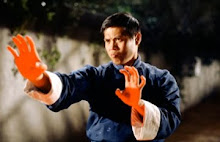
Why Haven’t I Watched It?: Well the thing is Last Hurrah For Chivalry isn’t technically a Kung Fu film. It’s a full blown Wu Xia picture, a genre that translates a little less gracefully to western audiences audiences.

Though the genre is broad, the simplest way to describe Wu Xia is it’s a permutation of the martial arts movie in which the pageantry and melodrama matter just as much if not more then the actual martial arts.

I mean listen to that theme music.


If that ain’t the sound of manly tears I don’t know what is.

Its not a bad thing, just disconcerting if you’re not in the mind set. This isn’t even mentioning a slow start, a plot convoluted even by genre standards, and two lead characters, who thanks to the fact that both where the same hyper stylized Wu Xia hair, costumes, sideburns, and eyebrows are just plain difficult to tell apart.

Like I said, none of this is a deal killer in and of itself, but combined its lead to me drifting off in the first half hour of the movie after a long day a whooooolllllleeee bunch of times.

How Was It?: A lot of fun actually. Once one’s expectations are suitably adjusted, Last Hurrah For Chivalry is kind of a blast. Things get off to a good start with the supreme dick of a villain (A blast to watch. A true case of first class mustache twirling, or given the mileu Beard stroking) coming to a wedding of a rival Kung Fu master and starts some shit. Inciting things with a twist that I’m sure is awesome in spite of or because of its blatant misogyny.

Everyone in the school is killed, save the requisite student who survives to vow revenge. If the title, genre, and awesome theme music didn’t tip you off, Last Hurrah For Chivalry is a wildly melodramatic film. In away all John Woo’s films are Wu Xia films. One of the elements that has always set his films apart is the extreme level of emotional masochism in them. The heroes of John Woo films go through torments that Joan Crawford would find too much. Last Hurrah is no exception and the mileage you get out of it will relate directly to the milege you get from shirtless, well muscled, oiled, and weeping Asian men vowing revenge and crying over the corpses of fallen comrades. Which happens to be something I have a high tolerance for.

Don’t judge me.

Its a shame that I didn’t hold on through those opening minutes. Slow as Last Hurrah starts when it does build to its action scenes it does so with gusto.


For fans of this particular school of filmmaking Last Hurrah For Chivalry is something close to a Platonic ideal. It asks for patience. But it rewards it as well.

Wednesday, May 26, 2010

Good God...


I love this band.

The Unseen #26: Prince Of Darkness

Yes its time yet again for yet another installment of Thing's That Don't Suck's most neglected column, THE UNSEEN (Lightening crash)


(The Poster Is Awesome The Movie Not So Much)


Why’d I Buy It?: John Carpenter. Hollywood Video closing. The Math isn’t hard.

Why Haven’t I Watched It?: The film has the reputation of being John Carpenter’s first major misfire. The first downhill coast on the long sad slope that led to Ghosts On Mars. Sure it has its passionate defenders, but so does In The Mouth Of Madness. A movie which a few effective moments aside is dreadful. I wasn’t looking forward to it.

How Was It?: Not as bad as it could have been and not as good as it should be. While this is certainly more of a film by the John Carpenter who made the films I love, like The Thing (Intruders hiding in the skin of friends), Assault On Precient 13 (Urban Paranoia) and especially They Live (Stylistically, philosophically, and iconagrophy) its still Carpenter’s first slip up. The fact that he was eventually able to get close enough to the finish line for a conditional field goal, does not change the fact that he fumbled the ball quite badly.

The problem of Prince Of Darkness is that it never capitalizes on its potential. As Roger Ebert pointed out in his review, you can’t make a movie that purports to be about the metaphysical nature of evil and then have most of its runtime feature people in pancake makeup hitting each other with planks. It’s not bad but its sadly the first time that Carpenter’s reach exceeded his grasp. The first time the potential outclasses the execution.

The film follows a group of grad students who are charged with monitering a force in an abandoned church, that seems to be the physical manifestaion of evil, and identifies itself as Satan himself. Its an intriguing concept with all sorts of juicy conflicts between religion and reason, faith and skeptisism, homeless people made of bugs and helpless coeds. With enough high falutin talk about Quantum Physics for a new What The Bleep Do We Know? But its all kind of terribly inert.

This is one of those movies that’s just not well thought through. Take Donald Pleasance’s character, as the priest who is confronted with the fact that everything he believes in is a lie. Lest you think that my religion is getting in the way, I’m not offended by the concepts but by the lazy writing. When Pleasance is forced to face this (after giving impassioned speeches about the limits of reason for most of the move) does he struggle? No. He hears a speech that’s half baked by Dan Brown standards, and gives a philosophical seemingly drunken monolouge that can basically be summed up as “Whelp I’ve devoted my life to a lie. Whoopsie Daisy!!! Wackedy Smackedy DooooooOooo!” And has about the same amount of depth.

There is some things to recommend about Prince Of Darkness. Carpenter has some effecting imagery. Using some simple tricks to show the laws of physics being blasely defied. He also uses a crowd of street people who are being effected by the evil to great effect. Never quite tipping his hands to when they go from “normal” to possessed. There is a great paper to be written about John Carpenter’s use of the disenfranchised as figures of horror. Time and time again he returns to that theme and image, Escape From New York, Assault On Precient 13, and They Live, and he never makes it anything less then some truly creepy and thought provoking stuff. Disturbing on more then one level.

The actors are also thoroughly invested, including Dennis Dunn and Victor Wong returning from Big Trouble In Little China, Donald Pleasance who always does strong work with Carpenter even when the script lets him down here. And a guy who looks disconcertingly like Tom Atkins. And even though the film does not quite achieve its ambitions one cannot fault the film for having them.

Still this film arouses nothing so much as the fervent desire that it was better.

Tuesday, May 25, 2010

Dragon's Forever


While Jackie Chan continues his long slow slide from the man who made The Legend Of Drunken Master and Police Story to the man who made Rush Hour 3, The Spy Next Door and The Karate Kid (BUT HE’S PRACTICING KUNG FU!!!!) its nice once to revisit his older films and remember that there was once a time when a new Jackie Chan movie was a very good thing.

Dragon’s Forever is a show case for Chan at his best, acting as a perfect display for his brand of unfakeable athleticism that never fails to get the jaw dropping. While in some of the lesser Chan film’s, his broad sense of humor can undercut the intensity of his stunts and performances, Dragon’s Forever finds the perfect balance of intensity and levity. The role, though still firmly a good guy, is a bit less noble then the average Jackie Chan character and aside from a few scenes with Hung, never turns into a clown the way Chan is want to do. He’s a full fledged badass in this, and it’s a role that’s satisfying to watch him play.

Directed by veteran Sammo Hung, whose skills in front of the camera (He plays a role here as the “fatty” comic relief) are of much use to him behind it. Hung simply put knows how to shoot action, because he knows how the mechanics of an action scene work inside and out. He puts together some stunning sequences for Dragon’s Forever. Simply some of the best displays Chan ever had for his artistry. Including a climactic fight scene that goes on for nearly half an hour, and features stunts off handedly performed that would serve as the centerpiece of lesser action movies. It rivals even the legendary battle that capped Drunk Master II, for sheer “I can’t believe the human body is capable of such abuse” disbelief.

The film’s story is perfunctory even by Kung Fu standards, involving a battle between a fish farm and a textile mill that’s really a front for a narcotic smuggling triad. There’s a lot of “wacky” highjinks and romantic interludes, where the apathy is almost audible. But there’s also a refreshing lack of homogenization. Say what you will about Dragon’s Forever, and a lot can be said about a film in which Jackie Chan “meets cute” with a girl while defending her rapist in court (This is what I believe is referred to as “Not Cool”).

but it’s a film that a startling specific product of its time and place. Even its tastelessness is appealing because something that can’t be replicated in our increasingly globablized world. Nowadays a Hong Kong Filmmaker would know that there is no way that would play in the American market.

Now yes on the simple level treating rape as somewhat more serious then jay walking, this is perhaps not such a bad thing. But its this same mode of thinking which turns someone who once tore through the cinema, with a grace and joy that seemed nearly supernatural, into a blandly wholesome family entertainer.