Tuesday, January 12, 2010

The Unseen #18: Branded To Kill


Why’d I Buy It?: I love Seijun Suzuki. This is by many considered to be his seminal work.

Why Haven’t I Watched It?: I’ve tried a couple of times, It wasn’t as though I disliked the movie it was something more insidious, there was simply nothing happening between us, no real reaction at all. I decided I’d take the radical step of trying to watch it sober and see how that worked.

How Was It?: If you’ve never acquainted yourself with the idiosyncratic joy of Seijun Suzuki I recommend that you do so as soon as possible.

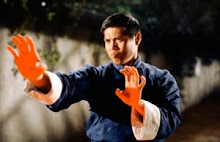
Suzuki was a hired studio gun who in the fifties and sixties suddenly went insane and started turning thse regular genre films into surrealist pop art meltdowns. In his best work like Youth Of The Beast (still my favorite of his films) Story Of A Prostitute, Gate Of Flesh and Fighting Elegy, its literally tough to believe what you are seeing from scene to scene. Branded To Kill takes such an approach to its zenith or nadir depending on your view.

Branded To Kill was the straw that broke the camel’s back. Nikkishi the studio that employed Suzuki fired then blacklisted him for the crime of making “incomprehensible films” which to be fair is not an entirely unjust charge.

Branded To Kill is Seizuki’s most influential film, with Tarantino, Kitano, Johnny To, Wong Kar Wai, Woo, Chan Wook Park and Jim Jaramusch all citing it as an influence (Jaramusch did a little more then site lifting one of the best gags for Ghost Dog).

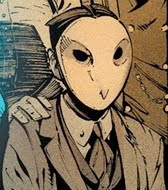
Branded To Kill tells the story of the number three killer in the world. After botching a hit he finds himself hunted by the organization that employed him. This is the sort of story you’ve seen a billion times in a hitman film, but Branded To Kill of course takes it as an invitation to go completely insane (The way the obligatory exposition is delivered when it finally is, a montage so deadpanly perfunctory that its kind of hilarious, serves a showcase for Seizuki’s contempt of narrative).

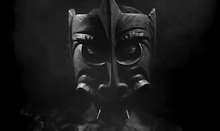
Aggressively absurdist, Branded To Kill is like a hitman movie written by Beckett. With a plot filled with inscrutable authority figures and enigmatic missions. Its shocking minimalistic (Not something you can normally say for Seizuki) at times, with its backgrounds either black voids or modernist abstractions. This is of course except for when its not like the scene in which our hero is besieged by animated rain, birds and butterflies and the time our hero escapes from the scene of a hit Via Balloon (not a typo).

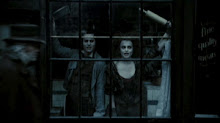
The film follows a killer whose fetish for the smell of boiled rice is matched only by the films own fetish for butterflies. He goes on missions, has rough sex with his nympho wife, falls in love (of a fashion with a fellow hitwoman) and then enters into an abstract duel with the Number One killer. It’s a jazz style movie, unbelievably freeform. Seizuki famously made most of it up as he went along, and then was rumored to have edited the entire thing in one day.

I know its uncool to side with the suits but in this case I can’t help but have some pity for them being that I would probably be unable to describe to you on a moment by moment basis just what is happening in Branded To Kill, even if I was watching it at the time.

I’m still not sure what I make of Branded To Kill. Seizuki’s a pretty bianary filmmaker to begin with, but this takes it to another level entirely. Its aggressively unpleasant to watch, perversely (yet flippantly) psychosexual, and jarring. Yet there’s something there. Branded To Kill is one of the few films that’s truly singular, there really is nothing else like it in existence. For better or worse its one of a kind.

Monday, January 11, 2010

RIP Eric Rohmer


Once again Goddard proves that the good die first while the bastards live forever.

The Revenge Of The Unseen #17: The Shooting

So this week is The Revenge Of The Unseen, here at Things That Don’t Suck. For those new to the blog, The Unseen is a column I started back in August, in which I decided I’d work my way through all the DVD’s I bought blind and never got around to watching. The amount is more then you might think it is.

It’s a fun column and I enjoyed writing it, but I kept preempting it for other stuff. First Revisit Eva, then 31 Days Of Horror, and then all my dcade ending stuff. And in the meantime the two giant stacks in the corner of my writing room just keep staring at me. So this week in order to make up for lost time, and thanks to the fact that I have another giant series I'm about to start (wouldn't you like to know.) I’m doing nothing but Unseen columns for the whole week. Lets start with…


Why’d I Buy It?: Its considered by many to be the best film of a major American director, and I’m pretty sure I got it for a price that was somewhat cheaper then dirt.

Why Haven’t I Watched It?: An existential western? Well shit bring the kids.

Monte Helleman is a director I find it a lot easier to admire then to actually like. Helleman makes philosophical (slow), poetic (slow), offbeat (slow) films. In theory, Helleman’s moody, existential, tone poem like character based films ought to be catnip for me. In practice it took me three separate tries before I could finally watch Two Lane Black Top all the way through.

As a result his movies aren’t the type of thing I’ll kick on casually I really need to be in the right frame of mind for a Helleman flick.

How Was It?: Well I’m not exactly sure.

While most Helleman films are naturalistic to the point of non existence, The Shooting has an odd heightened style. Its like a kabuki western, somewhere beyond arch, both in its self conscious staging and performances (Even from Oates!)

The Shooting opens with Warren Oates returning to his mining camp to find his friend dead, his brother on the lam after apparently killing a child and with only his none too bright assistant remaining. Soon a horrible bitch goddess, I’m sorry I mean woman, wanders into the camp and offers a thousand dollars to Oates to lead her across the desert to a location called Kingsley. Though she might as well have “Trouble” tattooed across her head, Oates takes the job, and a patented Helleman “wander around” begins.

Oates giving the least weathered performance I’ve ever seen him give (which still makes him tougher then 99 percent of people who have ever lived ever) but he’s joined by some utterly uninteresting actors, until Nicholson comes and gives it a swift kick in the ass. Or at least as swift a kick in the ass as Helleman’s style will allow.

Because while lord knows I respect Helleman’s artistry, the man knows how to make eighty minutes a slog. Oates, the dumb kid, and the terrible woman wander through the desert until they’re joined by Jack Nicholson (who co-wrote) who briefly enlivens things with his admirably nasty performance (The way he snarls “You’re brains are gonna fry out here.” Is a highlight) and the scene where he gets his just deserts is probably the only one in Helleman's career that can be called "electrifying" without deep sarcasm being intended. The whole thing culminates in a muddled existential climax, that is surely symbolic, but damned if I know of what.

Its one of those movies where you’re pretty sure something is happening. If only you knew what that thing was.

Saturday, January 9, 2010

Just In Case You Missed It


Just about every pop culture blog in the world has posted this, but just incase you missed it. Look at what they're doing with House Of The Devil. Ti West's tribute to 80's horror just took the ultimate step.


Oh fuck that's cool. Its even got the new release sticker and everything. I'm not ashamed to say that a less then sober trip to amazon has resulted in my purchase of said item.

The price really isn't that bad. Normally collector stuff like this gets jacked up pretty quickly but this is just five bucks more then a regular DVD. And it includes the regular DVD. I regret nothing.

I can't help but feel that horror really lost something with the move to DVD. I try not to be too sentimental about VHS (though I certainly have my collection) because lets face it VHS was a pretty terrible format. And before you cry foul, let me remind you that with VHS everything was released in fool screen. In VHS, dubs where you're only option. Let me remind you that after a certain amount of plays your VHS went "Well fuck it." and just gave up. DVD is the greater good.


But VHS allowed horror a skeavy kind of illicit pleasure. There's was something about watching horror on VHS. There still is.

So consider supporting Ti West's experiment. Even if you need to be a few Red Stripes in to consider it a good idea.

The A Team Are You Fucking Kidding Me?


Have you seen the new Trailer for the A Team? If you haven’t please go over to the AV Club and watch that depressing shit so you’ll know what I’m talking about.Joe Carnahan started the decade making Narc and has ended it making The A Team. If the man who was once a candidate for Heir to Scorsese wants to waste the rest of his career making cartoons they should at least be his own fucking cartoons.

See that’s the fucked up thing I really liked Smoking Aces.

Seriously dude I get that its tough that you didn't get to make The Grey or Killing Pablo or White Jazz or Bunny Lake Is Missing. But Seriously?

And trust me I get it. I know exactly why old Smoking Joe is making this movie. It’s tough out there, if you don’t have a new flick in Hollywood every couple of years, you might as well be DOA. And Joe Carnahan is a filmmaker who has been struggling for seemingly his entire career not to be DOA.

I’m going to say this just so I’m loud and clear, no filmmaker as talented (and he really is very talented) as Joe Carnahan deserves to have so many tough breaks. If there where any justice in the world Carnahan would be on film number ten right now, rather then film number four. But there is no justice in the world, and this is how Carnahan’s career has played out instead. The fucked up thing is that it all looks like a waste. And you know its not his fault. Its really not. But that doesn’t change the fact that it’s a God damn shame.

It all starts with Blood Guts Bullets And Octane. A movie, that just like the title sounds like, tried to emulate the whole Reservoir Dogs, Guy Ritchie aestitic. The film itself is not that special, what is special is the way it shows how Carnahan could leave his own stamp and level of intrigue on a genre as rote as the “Tarantino Rip Off Flick”. When you talk about Calling Card Movies, things made primarily to show Hollywood what you can do, this is the prime example.

Then comes Narc, which is simply a quantum leap. This is the kind of film legendary careers are built off. A bone hard crime film that managed to drag career best performances from both Jason Patric and Ray Liotta. It’s a tough film with real soul, the announcement of a major talent.

And this is where everything turns to shit.

First, Carnahan gets mired in development hell with Mission Impossible 3. After a fruitless multi year battle with Cruise and Co, Carnahan finally walks away, somehow pumps another film through the development hell. Five years after Narc should have launched him into the stratosphere he gets to make Smoking Aces. And here's the thing, its still worthwhile.

A lot of people like to shit on this film, but I’ll defend it. Yes it’s a step back from Narc. Yes it would have been served better if it was either A) Crazier or B) Less Crazy. But what it is is an intriguing Modern Day Spaghetti Western, that despite it flaws is seriously fun to watch (Not to mention Carnahan was the first to see the star quality in Chris Pine).

Yet despite the fact that Aces was a modest hit, and Carnahan had several movies in the pipeline, this is where it really goes to shit. Carnahan fails to get financing for his Dream Project Killing Pablo, and gets sniped by a cheaper fly by night production. His recovery project Bunny Lake Is Missing is torpedoed when star Reese Witherspoon drops out without warning two weeks before Principal Photography was supposed to start. Then Carnahan’s other dream project, a phenomenal sounding adaptation of Elroy’s White Jazz gets killed when the film’s producer and star George Clooney, unceremoniously walks out, also a mere couple months from shooting (and embarrassingly AFTER Carnahan released preproduction art featuring the star, on his blog). To make matters worse, another project that Carnahan sets up shortly after White Jazz implodes, The Grey a movie about wolves also quickly goes the way of the dodo.

So what do you do, when you’re a working director producer who has failed to get four movies off the ground?

You make the first movie the studios offer you. You grab onto it like a drowning man to a life preserver. And do you know what that movie was?

It was the fucking A Team.

And here’s the fucked up thing, I convinced myself, until I saw the trailer, that I somehow liked the idea. After all it wasn’t like Carnahan was just going to take the fucking A Team at face value. I was sure he’d work some of his fucked up magic on it, and turn it into an over the top spaghetti western extravaganza. A more mainstream PG-13 Smoking Aces. But watching the trailer I don’t see that.

Know what I see?

The fucking A-Team.

Carnahan has done the unthinkable. He’s given up.

Friday, January 8, 2010

Revist Evangelion: You Are (Not) Alone

You know its early in the New Year I want to do something fresh, something different something…


… I just can’t escape it can I?

For those of you who are newer to the blog, I did a feature last year where I went back and revisited the entirety of the anime series Neon Genesis Evangelion. Though it had been some years since I had seen the whole thing, I recognized the series as one of the corner stones of my taste. Equal terms impressionistic and expressionistic, personal and played on the grandest canvas imaginable, a complete mess and quite moving, I was gratified to find that Evangelion for all its flaws was still an intriguing work of art. Here's the whole shebang if you're interested.

I was surprised by how gratifying revisiting the show had been. Rather then be sick of it I wondered what would happen when Anno did the same.

Around the time I was starting the series it was announced that Hideaki Anno and Gainix would be retelling the entire thing through four movies, neither a step by step remake nor a complete reinvention this was basically the animated version of what Michael Hanke did with Funny Games. For those of you unfamiliar with the series this is significant because Evangelion in its home stretch gets “Eheheheh Crazy as a Loon!”


Anno has already told the ending of the series twice, and has between the two versions been more or less able to piss off absolutely everyone. Calling the endings he’s cooked up so far controversial is like calling Antichrist controversial it just doesn’t quite capture the passionate emotion (either positive or negative) that people feel about them. There’s a lot of speculation over whether or not Anno’s revisitation of the series means he’s ready to pull together a conclusion that will lean towards sensible, or if he’s just gone completely crazy and plans in the fourth film to just animate sequences from Last Year At Martriband and show them out of order.

Whatever Anno’s endgame is, Evangelion You Are (Not) Alone is an intriguing start. While word from Japan says that the second segment begins to deviate seriously from The series, You Are (Not) Alone finds the differences in the grace notes, with just enough major changes to seriously intrigue.

You Are (Not) Alone retells the original six episodes in a ninety five minute movie (Which really isn’t that much of cut only losing about thirty minutes. The Change in pacing actually works quite well, cutting deadwood and actually significantly extending some parts. Though its by its very nature “episodic” it does feel like an actual movie rather then an epic “Previously on…” ), if you want a detailed plot description read these three articles where I cover it ad nauseam. Otherwise I’m mainly going to be talking about the differences. You Are (Not) Alone is strange to watch for someone who knows the series. Some sequences play out shot for shot the same, others completely different, others some mix of the two (For example the battles between the Angels and The Eva plays out 95% the same right down to the angles and camera movement, but adds some impressively icky Cronenbergian body horror in the details).

The first thing you notice is that Anno has taken the “Apocalypse Right Now” aesthetic even further. Like I said one of the things that made Eva such a unique series was it didn’t take place in a world that was about to end, but one that was ending. From the opening frames You Are (Not) Alone emphasizes this. While in the series it was easy to mistake the world as one on the mend, Anno makes it clear here that in the words of The Doors, “No One here is getting out alive.” The sea is a blood red already looking like LCL, the gleaming world of Tokyo 3 is nearly deserted, worn and overgrown. It works to make NERV’s purpose more understandable (Not to mention having the Geofront bathed in Malickian golden light make a greater impression). While The instrumentality of humanity looked as though it was mainly being done for shits and/or giggles in the series, its more convincing as a necessary step for survival of conciseness here.

Anno has made good use of having a film sized budget here, adding detail to his animation that wasn’t possible ten years ago on TV. When The Angel first appears the powerlines in the background start to whip up and down with his vibrations, when the UN fires it’s missles on the Angel the camera briefly goes out of focus thanks to the heat shimmer. The lighting effects are more subtle, for example when the Eva First launches its Night and only the highlights on it can be seen clearly. The animation on the angel itself is more quizzical, more alien. Most of the animation is frankly beautiful, and more importantly its innovative in the way that made Gainax’s reputation.

Interesting too that Anno keeps the shot of the phantom Rei. Its always been such an odd shot, and Anno keeping it here seems to lend credence to the fact that its important and deliberate, rather then just something Anno forgot about. I feel like the idea that entire movie and show are a flashback as Shinji experiences the next level of human conscience looks more and more to be a correct one.

Interestingly enough one of the biggest differences in tone is that the expressionistic elements have been toned down. I wrote about how surprised I was by how arch Shinji’s first meeting with his Father was, in the TV show. And while the emotional beats are still hit, its staged more like a real argument and less like an expressionistic hell scape this time. Rei’s subsequent appearance is also less abstractly pieta like and more real world (The fetishization that has always haunted the character though seems to have gotten worse if anything). A similar toning down is done on Shinji’s lone walk through the city. Again it makes it wholly more realistic. Shinji runs away he doesn’t “runaway”.

While I doubt this will mean a decrease in Eva’s trademark stream of conscienceness style (It in fact briefly introduces one such sequence after the first battle some fourteen “episodes” before the series does), it’s a significant difference and an important one.

This kind of downplaying extends to the characters are well, and in my opinion some really interesting fine tuning has been done both individually, and subtly deepening and complicating the relationships between characters. Shinji still has all the angst he’s ever had, but he’s less incessant and sullen about expressing it. His endearingly sheepish and vulnerable qualities have been emphasized as well, and he’s even a bit of a smart ass from time to time. Gendo is still cold and demanding, but now seems more like a character as opposed to just being a symbol for cold demanding Fathers. Unlike his TV Show counterpart he never seems to be making people suffer for the sport of it, he always has at least a nominal reason (The man even projects something other then absolute certainty for once which was kind of shocking). Misato plays more like her character in the rest of the show rather then the fan servicy giggle bomb she started out as (And the movie mercifully cuts the bizarre “Up Skirt” joke that the TV show introduced us to NERV with) the culminative affect is that all these people seem just a little bit realer, a little less like symbols. Not to mention cutting a lot of the “We’ve been here before” feeling that I complained about in the concurrent episodes.

The film’s fine tuning extends to the plot. Like I said you hardly even notice the missing twelve minutes. If anything the movie seems to fit MORE in thanks to some judicious edits. Gone for example is the bizarre “Council of Five Snide Guys” (Give Anno Credit for Recognizing a narrative Dead end when he sees one) SEELE just goes ahead and immediately shows up in its true form (And an offhand comment here adds a truly interesting wrinkle to the whole thing, as does a small new conversation between Fukuyuski and Gendo that’s queasy in its implication and hints at the bold new direction the films might take.) The “Human” Nature of The Eva’s and Lillith's role are also revealed early (And with everyone knowing it Lilith this time).

The film’s philosophy has subtly changed as well. The title You Are (Not) Alone originally seemed to be a pat, almost cute, but its actually very apt. While at this point in the show Anno had already changed Tokyo 3 into a deserted extenstion of the characters. Anno goes out of his way to show the people still inhabiting it every opportunity he gets. Loneliness seems no longer to be Anno’s summation of the human condition, but rather at least partially, self imposed. The film’s imagery often shows the characters separated from eachothe rin the frame by obstacles. But they’re always man made artificial obstacles. Eva has a reputation for having a rather adolescent philosophy, well against all odds it seems to have matured.

The film climaxes with, the battle with the third angel. And its is particularly improved. The tone’s much grimmer (The attack on Shinji is even nastier) The animation and design on the angel which takes some unexpected turns is impressive and detailed (The damage appears before the ray is visible) There’s a real apocalyptic feel to the whole sequence and it’s truly compelling even if you know how the damn thing is going to end.

The film’s flaws are minor ones. For example like I said the animation is more detailed, but occasionally to its detriment. During the launch sequence we get to see all of the graphs and bars and measurements in excruciating detail. Alright Anno I can understand that you’re very excited that your imaginary measurements are CGI now, but do we really have to see them all? Another detrimental change, the recorded sounds of The Beserker Eva I know it’s supposed to make it sound more feral and out of control instead it makes The Eva sound like a very pissed off Grover).

But like I said these are just details. On the whole and against all odds You Are (Not) Alone seems to be worth the time and effort put into it. Hopefully the rest of the series will be as well.

Thursday, January 7, 2010

The Hills Run Red


I’m not snobbish about much, but as a rule I tend to avoid Direct to DVD films, and Direct to DVD Horror films especially. Fair or not, I figure if a movie can’t meet the low low standards of a Hill Have Eyes 2, then there’s little hope for it. But every once in awhile you start to hear a little buzz and get interested. With positive reviews from Drew McWeeney and Outlaw Vern, Hills Run Red was definitely such a case. I can see why it didn’t get released in mainstream theaters it’s a pretty strange film, but I can’t help but feel that it deserved at least a modest House Of The Devil style release.

Hills Run Red is a self referential film, but it earns its post modernism by also paying off on a pure genre level. Its not an annoying know it all film like Behind The Mask, but manages to play as a neat twist on the slasher genre without being beholden to it. Its kind of like the cool grownup version of what Hatchet was supposed to be.

There are the usual problems that beset modern low budget horror films. There are CGI gore shots, (quickly becoming the bane of my cinematic existence) aplenty, some amateurish acting and a few bits that are just looney tunes.

The problem with the modern day pastiche based slashers is they seem to agree with the detractors of the genre that all slasher films are are a bunch of kills and tits. The Hills Run Red God bless it actually takes the time to build mood and mythology, so that by the time shit actually starts to go crazy you care.

The Hills Run Red is about a film student who starts to make a documentary about a “lost” horror film, titled you guessed it, The Hills Run Red. Only a poster and a nicely done (though obviously digital) Grindhouse Trailer are left behind. It’s a good concept for a movie. Every film fan has come across movies like this, films that are just deemed to insane to actually exist. I wrote about my encounter with The Rape Killer at BNAT. And seriously lets say you where fucked up enough to want to see The Rape Killer, how would you go about doing so. Do you think anyone took care of the print as it was bouncing around in the back of a pickup truck going from Drive In to Drive In? If a major studio bought the catalogue of whatever piss poor exploitation company put it out does anyone think they wouldn’t just burn it? Are there teams of Preservationists working around the clock to save The Rape Killer?

Films disappear everyday. What if one of them was truly diseased. Statistics say its gotta happen. The only link to the film is the directors daughter, whose now stripping in a roadside bar in Seedyton, Fucknowhere. This leads to the most hilarious scene in the film, where our incredibly wimpy hero suddenly thinks he’s Lee Marvin, ties her to the bed and cures her of her heroin addiction in the space of a single montage.

It takes a lot for a movie to overcome a scene as silly as that, but to TThe Hills Run Red’s credit it does. Our intrepid band of heroes decides to go out to where the film was shot, like I said one of the nice things about Run Red is it takes time to build a general mood, things don’t get to slashing until about half way through the film, and by the time they do. Oooh Boy.

I have to commend the filmmakers for having the brains to conserve their budget. Its obvious there wasn’t a lot of money to go around on this film, but they managed to scratch together enough to hire William Sadler (AKA that guy whose crazy) for the pivotal role of the Director. And the man was worth every penny.

I’m not going to spoil what happens once the kids get to the set, only to say even a hardened genre hound like me was surprised (not so much at the big plot twists but there where plenty of little ones). I’m as a rule suspicious of post modernism, but Hills Run Red shows how to do it right, weaving its commentary in organically (For example the older killers are all old school slashers and don’t think much of their children’s torture porn). As opposed to Behind The Mask and Hatchet which did everything but have their characters turn to the camera and say “We’re being postmodern.” (Come to think of it Behind The Mask might have actually done this).

The Hills Run Red is an effective horror film with some good beats, and an ending that’s genuinely nasty. It’s a good horror film, but for a direct to DVD one its fucking Rosemary’s Baby.