Showing posts with label Werner Herzog. Show all posts

Wednesday, October 20, 2010

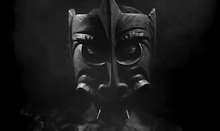
31 Days Of Horror: Day 20: Nosferatu (1979)


Decade’s before Gus Van Sant tried his cheeky little post modern expiriment with Psycho, Werner Herzog did much the same thing remaking FW Murnau’s Nosferatu on the same locations.

In all fairness unlike Van Sant Herzog was never attempting a shot by shot remake, he makes some significant changes, both to the story and in the style. He wanted to recapture the feeling of decay and menace so paltable in the original. A laughable idea from anyone else, from Herzog another entry in his “just crazy enough to work” file.

Nosferatu does make a tempting target. It is after all one of the finest movies ever made, and has never dipped into the realm of camp. It’s power enough to make it one of the few silent movies that is remembered by “civilians.” But Murnau and Herzog were such opposites as directors.

Murnau was the master of artifice, the one of the first to realize that a studio was more then just a convenient place to shoot but a place that could manipulated until it was no longer something like reality, but something more so. The finest user of the crane this side of Scorsese. The Master of the close up.

If Murnau composed in close up even in his long shots, then Herzog is the master of the level thousand yard stare, even when his camera is six inches from his subjects face. If Murnau’s style depended on the studio’s flexibleness, Herzog’s depends on his subjects and settings inflexibleness, the “voodoo of location.” Murnau figured out what artifice is for; Herzog desperately seeks ecstatic truth, even when he’s just flat out making shit up.

It’s an odd mix that produces some interesting frisson.

Though the story is mostly the same in the broad strokes some interesting changes have been wrought both by Herzog and just the advancement of film itself. Color and sound change the film more then I would expect it to. Particularly in our attitudes towards the count (Klaus Kinski in the most subdued performance he ever gave for Herzog. Yep an undead demonic creature whose lived for centuries really brought out the subtle in Kinski). Max Shrek’s count was so buried beneath layers of makeup so thoroughly inhuman, that it’s simple just to look at him and think “Monster.” That’s why hearing him speak, in precise Teutonic tones, is such a shock. Speech is a humanizer in a way intertitles aren’t, and Kinski’s Orlock instantly becomes more decrepit, pathetic and sad than simply monsterous.


Not that he’s not frightening, he’s just an entirely different kind of frightening.

As always in Herzog, the imagery is astounding. The endless stream of pallbearers bearing pine coffins that cross against our heroine, the opening montage of mummies, the plague ship with its blood red sales heavy in the water, the 11,000 rats (all painted grey because Herzog could only find white mice) who stream through the streets.

Nosferatu does have a few problems. The movie is well, let’s just say a little bit slow. Herzog took the movie from 91 minutes (in it’s most complete prints) and extended it to 110. Most of that extra time is taken up with people wandering around staring at things. An image that if do not have an affinity for you will soon find maddening. It’s a film that is dependant, to say the least, on you synchronizing with its wave length. Also, though most of the changes that Herzog makes to the text work for his own purpose, the strange “Gotcha” ending is not one of them.

Unlike its ancestor Nosferatu may not be a perfect film, but like its predecessor, it is a haunting one.

Tuesday, September 28, 2010

The 25: Part 16/17: Aguirre The Wrath Of God/ A Personal Journey Through American Movies With Martin Scorsese

(The twenty five is an examination of the twenty five films that made me a cinephile. These aren’t necessarily what I consider best movies, nor are they necessarily my favorite. Though in some cases they are both. Instead these are the films that made the biggest most indenialable impression on me. Films that if they hadn’t hit a certain way at a certain time I would not be the same film goer that I am today. They’re the twenty five.)

So the I was around fifteen, I’d explored world cinema, the American classic style, and even had begun to dip my toe into the wild world of cult movies. I was beginning to feel pretty cocky about my vocabulary. What more was there to see?

There is no more dangerous time for a cinephile then the time when he first begins to fool himself into thinking he knows something. It’s a pattern I’ve seen countless film fans fall into, the happy complacency with a few hundred films to revisit. Only occasionally making room for the odd contemporary film.

It’s death for a student of film. And if you’re extremely lucky you get to see a few films that let you know just how small your palate is.

And that’s why no matter how disparate these film’s might appear, in my mind their intrinsically linked. No two films so violently expanded my horizons. And thanks to them, the day I stop seeking new experiences at the cinema, the day I’m convinced I’ve seen all it has to give, will be the day I’m lying cold in my grave.


Of the two, Aguirre is perhaps the easiest to understand as a shock to the system. I had just fallen under the tutelage of Ebert’s grandfatherly prose, and was drawn to the film by his Great Movie essay. I don’t know what I expected… No that’s a lie, I do know what I expected because the Hollywood version of Aguirre The Wrath Of God is depressingly easy to imagine.

One can picture it now, the scenes of the frightened conquistador’s trembling in the jungle being picked off one by one by an unseen force. A Predator-lite, with plenty of ambient sound, tense low angled shots, and frenzied character actor’s screaming “WHERE ARE YOU!!” into the jungle, a handsome, perhaps gone slightly to seed leading man in the role of the charismatic Aguirre, desperately trying to lead what remains of his conquistador’s out of the jungle, as a budding romance kindles between him and his deceased captain’s wife, and his plucky daughter learns to live in a man’s world. This is before the climatic battle between himself and the Indian tribe in which he gains their grudging respect. Ending up cleansed in his struggle for survival from his nasty imperialist impulses.

You know, some horseshit like that.

What I got was a mixture between holy man’s vision, and delirium induced vision of ants crawling out of one’s skin. A meditive journey into death and madness, filled with unforgettable images, and “ecstatic truth”. To say it was nothing like anything else I’d ever seen before, would be an understatement. As our doomed legion drift’s farther down the river each either reverts to base and cruel animal nature, or into philosophic abstraction. Until the unforgettable ending scene in which Kinski struts around a sinking raft amid a pile of corpses, talking about marrying his (dead) daughter, while he squeezes monkey’s in his fist.

And Oh Kinski, what have we here, bulging eyes, and thick, sensuous, rotten lips drawn into a rictus, remembering you’re supposed to have a hunchback perhaps 40 percent of the time.

But it wasn’t just the madness, it was Herzog, whose style of filmmaking was so different from anything else I’d ever seen that it may have well as been. To say Herzog lacked the concerns about the norms of narrative filmmaking would be an understatement. But his films were so unabashedly narrative.

Cinema wasn’t just a language, it was a language vast enough to contain a foreign one. It was simply put a rush.


But while Aguirre was an attack on the conventions of cinema I held. Almost as much of a threat as a promise. A Personal Journey Through American Movies With Martin Scorsese, on the other hand, presented a perfect example, and articulation of what I considered and consider cinema to be. A quasi mystical passing down of experience through the ages. A retelling of the experiences of common humanity and ideals, occasionally ugly common humanity and ideals, through the ages.

Unlike all other art forms, I would argue that the cinema is primarily not a reach inward, or a reach outward, but a reach forward.

A Personal Journey Through American Movies, proved a warm illustration of this. With Scorsese acting as the ideal tour guide, opening up the history of film as a nourishing buffet. Cementing Scorsese as the ultimate master, the ultimate teacher from whom I would always try to learn.

The filmmakers who this film introduced me to are almost innumerable, but just off the top of my head there’s, Sam Fuller, Raoul Walsh, Vincent Minnelli, Nicholas Ray, Griffith, Von Stroheim, Wild Bill Welleman, William Wyler, Fritz Lang, Anthony Mann, and Robert Aldrich.

That is, if I may be vulgar, that’s a shit ton of movies.

Simply put no single act of cinema going expanded my vocabulary and palate more. No single act of cinema going so made me a better film fan. It was a gentle quantum leap. A mellow but firm reminder that I was only a student. That there was always more to learn,

I can only hope that this will always be so.

Sunday, April 18, 2010

The Unseen #25: Wheel Of Time

(The Unseen is the red headed step child of The Things That Don’t Suck columns. No matter how hard I try or how hard it tries to please me, I always seem to miss its ballet recitals and soccer games, and get it carton of cigarettes for Christmas. But here we are again and I’m going to try and do better. At least until the next time I get to drinking)


Why’d I Buy It?: Cheap Herzog film. Nuff said.

Why Haven’t I Watched It?: Only bought it recently at the Hollywood Video fire sale.

How Was It?: Buddhism is notoriously uncinematic. Unlike the operatic hemming and hawing of the Abramaric religions, and the exocitism of other Eastern religions like Shintoism or Hindi, there’s just not much to show, when it comes to Buddhism. Inner peace and harmony with ones surroundings is a more then noble goal, its just difficult to film. At one point Herzog even complains, that the "Culmination of the spiritual event is invisible to our cameras."

Wheel Of Time documents the Kalachakra festival (later combined with a second festival, when the Dalai Lama grows ill), held at the place where the Buddha first obtained enlightenment, an event for which over half a million Buddhists assemble. The film cuts between the festival itself; both the events, prayers, rituals and arguments and the logistics of feeding and housing half a million monks and lay people. The long arduous pilgrimage the faithful make. And The construction of the Mandala, at the center of both the film and the festival, a beyond intricate sand painting, which represents nothing less then the visualation of Nirvana.

Herzog captures his subjects and their surroundings with his expert documentarian’s vividness. One of my favorite things Herzog does, as a documentarian, is the way he’s not at all afraid to just let a shot run, unworried about communicating over much in story, character, or theme. Instead he just allows the detail to seep into the film allowing the world to sketch itself in its own intensity. He does it frequently throughout the film, seemingly trying to meditate with its subjects. But there is something furtive and restless about Herzog’s camera.

There are certainly shots here that in their oddity and perfection belong with the best of Herzog, like the long shots of pilgrims stopping at literally every step of their journey, to lie down in prostration on their bellies, on their way to the shrine. Its easy to see in these moments of single mindness what made Herzog want to make the film. Wanting to document those who, as he puts it with his inimitable Teutonic precision “Measure the length of the Earth with his body from head to toe.”

And yet, Herzog is a man who has made his reputation documenting the extremes of both human behavior and the physical world. Ironically this is the first time I’ve ever felt him out of his depth. Not that he makes a bad film, far from it. Its just that where he usually charges forth with teutonic vigor, here he seems not quite sure of himself. Its somewhat Ironic that a man might stare madness directly in the face, and yet be unsure how to react to peace and serenity.

Friday, January 15, 2010

Bad Lieutenant Port Of Call New Orleans and The Princess And The Frog: Best New Orleans Double Feature EVER!!!


Yes I watched both of these films within an hour of each other. No my head somehow managed not to explode.

Herzog’s journey into the Iguana fueled heart of Darkness has by now been justly praised as a bit of batshit looney wonderfulness.

I unlike most of the people who have reviewed the film, I actually LIKE Abel Ferrara’s original, even though I have a friend who literally hasn’t forgiven me for showing them it. Ferrara’s movie is a dark, achingly serious film, a parable about God’s capacity for Grace, that’s earnest in both its theology and its depravity. Its no wonder that some find it a bit hard to swallow. That and it features a scene involving Harvey Keitel’s guttural howls and penis.

Herzog as expected took another route, turning the film into a perverse black comedy (if you want an uncomfortable try being the only person laughing during Bad Lieutenant while you are also perhaps the only person under 70 in the theater). And even less expectedly into a genuinely effective policier. Herzog has never been one to really give a fuck about plot. But he acquits himself surprisingly well here. You genuinely do want to see how it all comes out.

The film’s Catholic Angst has been almost surgically removed (Herzog keeps a lot of Catholic Iconography in the frame though in what basically amounts to a fuck you to Ferrara) replaced by a Teutonic Nietzschian splendor.

The film of course follows Nic Cage behaving badly as he stumbles his way to the conclusion of a case involving the execution of a family of immigrants by a gangster named Big Fate (Xzibit shockingly not terrible) Herzog uses post Katrina New Orleans the way he used the burning Oilfields of Kuwait and the Rainforest previously a wild exterior landscape that somehow perfectly reflects the interiors of his characters.

Fairuza Bulk continues her quest to appear naked in a film by every director of The New German Cinema (Its too bad Fassbender didn’t hang around he would have loved her. The scenes involving Cage’s alcholic mess of a family have a surreal Tennesee Williams on Abysinthe Southern Gothic vibe.

And yet, praising this film almost feels like praising bad Behavior. Not from Herzog but Cage. No matter how committed he is to the role, Bad Lieutenant feels like the apotheosis of BAD Nicholas Cage. The Cage who screamed “HOW’D IT GET BURNED!!! And THE CAVES WON’T SAVE YOU!!!!”

And the thing is I liked Good Nicholas Cage. Watching Kick Ass was such a shock, because Matthew Vaughn managed to pull out a good Cage performance for the first time in decades. I don’t know if he’ll be recognized for it, but for the first time in well forever, Cage was using all his weird live wire energy towards building a person rather then a ball of twitches.

Herzog on the other hand, is nothing if not indulgent, and he’s more then happy to let Cage go as far over the moon as he want’s too with his lucky crack pipes.

Still it seems churlish to complain about a movie’s gonzoness when it yields such rich rewards as the Iguana scene and a line like “Shoot him again his soul is still dancing.”

If I was surprised by how cruel Gilliam ended up being to his characters, the surprise of how lenient Herzog was to his but was just as shocking. Though he pretty efficiently mocks the idea of a happy ending to this story, he doesn’t preclude it either.

It’s a surprising ending to this surprisingly glorious mess of a film.

Princess And The Frog, has been taking a lot of lumps. Rather then hailing the return of 2D animation to theaters, many have stuck up their nose because of the film’s supposed flaws. It sticks too close to the standard style, it doesn’t focus on racism in the deep south setting, its unimaginative in its animation, and stupidly praises the Princess lifestyle.

I can’t help but find that most of these charges ring false. The film’s supposedly lack of a social conscience is kind of a head scratcher. I mean first of all this is a fantasy film for children, not The Color Purple. And secondly though it doesn’t beat you over the head with it, the commentary on racial disparity is there. On the opening trolley ride from Charlotte’s life of unearned opulence to Tianna’s own home in the slum, and a later patronizing comment from a real estate agent about “a woman of her position” make the point subtly but without any doubt to the subtext.

As for the supposed empty praising of the princess style, I was actually surprised at how harsh the film was to the whole idea using the character of the vapid Charlotte to take some pretty hard shots at the vapidity of “Waiting for you prince to come.”

As for the animation. I just rewatched Lilo And Stitch and was gratified by just how daring much of the animation was, from the Miyaziki inspired impressionistic water color backgrounds, to the expressionistic designs of the aliens themselves. While Princess And The Frog sticks much closer to the house style, though its far from the stagnant dung heap the studio drew in for its last couple of 2D films, it proves itself unafraid to take some real bold leaps with its animation. The film uses its (idealized of course) New Orleans setting to its full extent. Most strikingly in a Hirschfield inspired musical number, but also in the free form animation on Dr. Faciler and his merry band. The angular shadow men are sure as to inspire as many nightmares as Malificent and her isometric trolls. The handling of Facilier is surprisingly and gratifyingly dark. By the time he turns into a psychedelic Baron Samedi for his big musical number, he has simply become a literal joy to watch. The animation on his “friends from the other side” is genuinely unsettling, and Keith David’s performance has a delectably nasty edge to it.

It draws on other surprising influences as well. Some of the animation in the beginning draws on an anarchic Tex Avery style spirit (And features what I believe to be Disney’s first out and out tit joke. Though I could be wrong there). Later in the one truly inspired sequence in the film’s saggy middle section, involving three grotesque hill billy hunters, it reaches into its past doing the personality filled intensely caricature based animation, that made the Disney formula work in the first place.

Like I said, after the inspiring opening third, the film does sag in the middle. There’s a real chip on this portion's shoulder. A real “THAT’S RIGHT THE CLASSIC DISNEY PLAYBOOK STILL WORKS!!! WHAT!!!” As a result the sequences hit every beat in the Disney style that annoys the shit out of people. From cheery animal sidekicks, over blown (but above average) musical numbers, “banter” the fetishtic idealization of everything (It takes some work to idealize a fetid swamp but its managed) and valuable life lessons learned.

Now I don’t mean to be controversial here, but if anyone thought that any of these things wouldn’t be in a Disney movie they might not have any brains at all.

Still things pull together for a climax that brings back some of the innovation, with a surprisingly dark tone, along with some of the Disney beats that payoff well enough to suggest that there’s life in the dusty old playbook yet. 2D animation is an artform that’s very close to my heart. And it’s gratifying to see it back in such fine shape.

Wednesday, November 11, 2009

The Unseen #14: Veterans Day Edition: Rescue Dawn

For those new to my blog The Unseen is a semi regular feature I do in which I explore films that I own, but have never seen. The number of which is higher then it has any right to be. Sometimes I get pleasantly surprised, sometimes not so much. Sometimes a dog pisses on the ashes of Freddy Krueger and Dokken sings. Either way it’s always interesting.


The Unseen #14- Veterans Day Edition: Rescue Dawn

Why’d I buy it?: I’m a huge Werner Herzog fan. I’ve been lucky enough to meet the man twice both of which rank as surreal ass experiences. The idea of being able to buy one of his films at a big box store made me kind of giddy.

Why Haven’t I Watched It?: Like I said no Goddamn idea. I love Herzog, I love Bale, I love the original documentary Little Dieter Needs To Fly. And I loved the utterly subversive notion of a Werner Herzog film playing in the multiplexes where normal people could be exposed to his mutant filmmaking rays. But for whatever reason, I missed it in the theaters, and then despite the fact that I bought the DVD the first day it was out, it just sat their on the shelf accusing me. I don’t know why I never made the time to watch it. I mean yeah a harrowing story about a Vietnamese prison camp maybe not the first thing you wanna pop on after a hard days work. But really, I never made time for a new Herzog film? Really?

How Was It?: Pretty fucking great. The film was exactly what it promised to be. A real Herzog, driven to the limits of human experience, film that somehow managed to get released by a major studio. I’m pretty much a gushing fanboy when it comes to Herzog’s style, so bear with me, but the thing I love about the man is that he never seems to have seen a movie other then his own before. He genuinely plays by his own rules. Check out the scene where Dieter’s first shot down. The laws of narrative expediency tells us that Dieter will surely be captured right here. Herzog instead delivers a fifteen minute mini odyssey depicting Dieter’s first battle with the jungle. Basically a brutal tone poem, It’s the kind of left turn no one else would do, maybe Malick but Malick would never even conceive of shooting it with such an unromantic eye. Herzog does it perfectly.

Once Bale is finally captured, the film slips into a different gear. Herzog has never been accused of being a great humanist (at least not in his narrative films) but the relationship he creates between Bale and Steven Zahn is the movies frail doomed heart. The only real problem with the movie is Jeremy Davis’s ultra twitchy performance as a fellow POW whose gone round the bend. I’m not a Davis hater, in fact I usually enjoy his idiosyncratic style (“I could tell you what's happening… but I don't know if it would really tell you what's happening.”) but Jesus the man took the twitchy up to eleven.

The movie continues with Herzog’s pet themes of extreme behavior (watch an A list star choke down maggots), the pitilessness of nature, the bounds of human physical and mental endurance, and human folly (The death of Zahn is so stupid and pitiful and pointless that it’ll break your heart).

Rescue Dawn is a truly great film, and deserves its place Herzog’s Oeuvre.