Tuesday, October 1, 2013

31 Days Of Horror: The 31 Dayening: V/H/S/2


Yes I am actually giving this a shot. We’ll see how it goes.

V/H/S/2 is a much stronger film than its predecessor. V/H/S was one of those films that I didn’t mind as I was watching but which curdled somewhat in hindsight. Curiously, considering the first films success the makers of V/H/S/2 seemed to agree and the anthology film wipes the slate clean creatively, caring over Adam Wingard who directed the framing story of the original. The film features no returning directors and replaces the rather loathsome group of thugs who provided the first film’s wrap around story with a significantly less vile shady Private Eye, who along with his girl Friday, stumbles across a new cache of haunted tapes while searching for a missing student.

The tapes are pretty solid for the most part. Adam Wingard’s, “Phase I Clinical Trials” is an old fashioned haunting story that wouldn’t be out of place in MR James, about a man who receives a new high tech eye and starts to see ghosts with it. As said Wingard is the only director returning from VHS and thus his film is the only one that still has a whiff of the misogyny that plagued the first film like so much stinky cheese. But given that this particular character is clearly meant to be damaged it’s less objectionable and briefer than anything in the first film. It’s a pretty tough story to fuck up, and Wingard doesn’t, though he does raise questions he has no apparent interest in answering.

If there’s a bummer in the bunch it has to belong Eduardo Sanchez’s “A Ride in the Park.” Not that it’s a particularly bad piece of work, but given its pedigree I was expecting something a little stronger. It’s not every day that the man responsible for pretty much defining the modern day incarnation of a subgenre returns to said subgenre. But when he does one hopes it will go better than, “pretty clever”. Blame it on Zombie fatigue or over hype but while this is some well staged mayhem it falls short of Sanchez at his best.  The Blair Witch Project still stands as one of the most frightening films of all time, and Sanchez has done strong (and sadly underrated) work since then.  The film is a solid single, but given that its Sanchez’s most high profile project in a while I was kind of hoping for him to knock it out of the park.

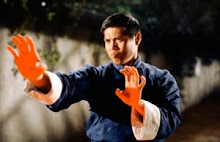
No that particular distinction belongs to Gareth Evans “Safe Haven” a chillingly effective piece of horror that managed to be a lot of fun even with The Sacrament rattling around in my head. Though the idea of Evans leaving Kung Fu behind makes me sad on the inside, “Safe Haven” proves that should he ever chose to shed genres he will have no problem doing so. He finds the most innovative staging for the naturally limiting, first person horror that the series demands. He finds the most vantage points to shot from, and carefully sets up some matching shots, while keeping the limited claustrophobic viewpoint that the format provides. Most of the scares belong to him. The only flaw comes in the film’s final punchline, which while fine in and of itself is provided with a bit of physical effects work of which it can kindly be said is not up to snuff. Might I suggest a silhouette next time Mr. Evans?

Things close with Jason Eisener’s Slumber Party Alien Abduction. While a better than Eisener’s grotesque and not in a good way, entry into The ABCs of Death, Eisener’s work still falls short of the lunatic energy of Hobo With A Shotgun. Though in all fairness, the task of following up “Safe Haven” is pretty damn unenviable.  

All in all V/H/S/2 isn’t going to revolutionize the found footage genre, or change anyone’s mind about the format, but it’s a solid piece of work.
...


I am happy to announce that you can buy my work in print now. Yessir, the good folks at Paracinema have seen fit to unleash my words on an unsuspecting world. It's a retrospective on Sam Raimi's work, and you can read it in Issue 20. Seven Dollars! Cheep!

...

In further news I'm also happy to announce that I've started writing for Paracinema's website. Right now I'm in the midst of releasing my Fantastic Fest Coverage which was more fun than should be allowed. I've covered such works as The Sacrament, The Nightbreed: Cabal Cut, All The Boys Love Mandy Lane. And some movies that aren't even horror.

Any tweets or facebooking is much appriciated.

...

And as always you can pick up my book Son Of Danse Macabre on The Kindle or The Nook. 2.99. Cheep! We're coming up on a year of my baby, and there'll be more to say about that later...

Until then, Hell Yeah OCTOBER!!!!


Wednesday, July 31, 2013

Only God Forgives


A film like Only God Forgives tend to make terms like failure and success more difficult to quantify than one might think. Only God Forgives shows Refn’s preternatural stylistic instincts in full bloom, backs it up with a Cliff Martinez score that is the perfect tone of icy disquiet, all at the service of a bunch of appalling people doing and saying appalling things. If this is all you require of the film it is a success. If you expect to give a shit about the people within the frame or anything they say or do you will most likely be disappointed. As has been said before, this ain’t Drive.

In fact let’s take that a step further, “This Ain’t Drive” may as well have been the title and the tagline and seems to have been the single defining philosophy and creative impulse behind the film. The only way Only God Forgives makes any artistic sense at all is as a direct response to Drive. Despite having the same creative team I don’t think it goes too far to say that the film plays as a direct inversion of the earlier collaboration. While The Driver certainly had his issues, was arguably psychotic, he also had an undeniable glamour and more important, competency. While Gosling may wear the same stoic expression throughout Only God Forgives here it is not a mask of a man reigning his potential for violence and passion in, but an accurate reflection of a ruin. An emotionally retarded, mush mouthed little boy who literally fails at every single thing he attempts to accomplish throughout the film. (I happened to see the film after a screening of Evangelion 1.11 You Are (Not) Alone and Shinji Ikari had more agency as a character) He gets the snappy wardrobe but wears it as comfortably as a six year old in an Easter Suit. In short The Driver had a damaged nobility. In Only God Forgives there is only the damage.

While Drive tempered its occasional ugliness with great gouts of romanticism Only God Forgives features an entire cast that is irredeemably evil, a group of people who have without exception rotted all the way down to their cores. While Drive made vengeance cool Refn goes out of his way to make it a bloody sordid waste of time. Unlike Drive where no one outside of the main cast was affected there is so much collateral damage in Only God Forgives that it begins to border on the absurd. By the time the first act draws to its close the body count on innocent bystanders is in the dozen.

None of this is a bad scene in and of itself, and isolated scenes of Only God Forgives showcase Refn’s ability to create an almost Lynchian air of unease (particularly during a torture scene featuring a room full of witnesses who have all closed their eyes). But perhaps it also explains why despite its aesthetic pleasure I cannot help but feel cool towards Only God Forgives. Seldom have I seen a film so dependent upon its relationship with another.

Thursday, May 30, 2013

The ABCs Of Death (And Others)


I've written before about my affection for anthology films, and the pitfalls that this particular format invites. Almost inevitably an anthology film is going to end up uneven, it's built into the form. But even judging by the standards of the anthology film The ABCs Of Death must win some kind of record for staggering shifts in tone and quality. There are EKGs that are smoother. Say what you will about it, but it makes for a lively film.

The gimmick of The ABCs Of Death is pretty easy to grasp. Each short film is based around a mode of shuffling off this mortal coil. The tone goes from literal cartoonish to grim. The films that contain them range from so good that I'm pretty sure that it qualifies as a minor masterpiece (D) to films that though bad, I'm happy exist if only because it means that the directors were busy, and thus not out murdering people (F,H).

Oddly enough it's the big name heavy hitters who do the worst job. Ti West's entry is such a throwaway that it would have been less insulting had he simply videotaped himself walking onscreen, yawning and then flipping the audience the bird. Jason Eisener's entry though stylishly shot, is also bizarrely unworthy of the treatment it is given. It's a dirty joke that has been polished until it gleams like a black diamond. Kind of what a fifty million dollar John Waters film might look like. Except it isn't funny. Of the big names only Ben Wheatley delivers with his slight, but stylish and clever bit of first person horror.

Among the less memorable episodes are the collections two animated features. Both of which are toilet themed. Beyond suggesting that a rather unsettling Venn Diagram might be drawn between Animators and Scat fetishists, neither of the shorts does much worth commenting on.

Among the highlights are the aforementioned D, a top notch piece of silent storytelling, that seems as though it will end with one punchline before abruptly substituting it for another. It's among the most heartwarming films where someone is eaten alive that I can think of. The manic W, and the stylish O are also worth watching. And I must give a certain begrudging respect to L. Easily the most disturbing short of the bunch. Like something from Old School Takashi Miike, or Eli Roth's id. It's absolutely repulsive, but follows through on the courage of its convictions so thoroughly that I can't help but bow to it. For all the blood and bad taste that the various filmmakers flaunt throughout The ABCs Of Death, L is easily the only one that disturbs.

...

I was lucky enough to get a chance to sit down and talk with Xan Cassevettes, director of The Z Channel, you might recall that I have something of a fondness for her work. To the point where I went ahead and cut my own version of the montage that ends that movie.

Getting to talk to her was a real treat and just as much fun as I hoped. She gave a great interview and I hope you enjoy it.

...

I had an interview of my own to participate in, on NPR's Writing On The Air. It was a true pleasure speaking with Francois and Narrissa talking about Son Of Danse Macabre. (Which once again is available on Amazon and BN)

...

And last but not least I tackled both Baz Luhrman's Pretty Good Gatsby and Jack Clayton's Not Very Good At All Gatsby, at inReads. Good times!

...

Also incase you haven't seen it, there's a very cool kickstarter for a practical effects film called Harbinger Down. It's the kind of cool practical, monster film that us genre fans are always bitching for. Well lets try putting our money where are mouths are huh? I'd love to see this thing get made.

This is exactly the kind of thing that I hope Kickstarter is eventually able to fund en mass, not amateurish, soliphistic art projects, not the work of professionals seeking a handout. But talented filmmakers who don't quite fit into the studio system anymore. Alex Cox already got a film made this way. So why not Richard Kelly? Why not John Carpenter? Hell think even bigger than that, what would happen if Terry Gilliam put up a Man Who Killed Don Quioxite Kickstarter. It has to start somewhere and Harbinger Down seems as good a place as any.

Saturday, May 11, 2013

A Quick Note


My good friends Chris & Sarah Daly are working on bringing their short film Incognita to life. Chris and Sarah are the very definition of good people. True movie lovers and the little they've shared with me about Incognita sounds devious to the core. I want to see it folks. I. Want. To. See. It.

They're currently raising funds through Indie A Go Go, so if you have a little something to spare for an independant film that is actually, ya know- independant think about forking over a bit to help them out. I'll thank you for it.

Sunday, April 28, 2013

Sightseers


There is a fine art to waiting for the other shoe to drop. Even in the early scenes of Sightseers there is a sense of menace, of things being decidely off, that cannot be accounted for simply by the cringe humor that the film's early scenes peddle in. There is the sense that at any moment the floor might give way underneath you. Ben Wheatly's previous film Kill List also trucked in such a sense, but while Kill List felt entirely subservient to its tacked on centeral gimmick, the punch line in Sightseers feels much more organic and hits all the harder.

Sightseers is centered on Tina, a British woman in her mid thirties who still lives with her relentlessly cruel mother. One of those people who is so beaten down, so used to being unhappy as a matter of routine, that the idea of taking a fairly mundane road trip in her boyfriend's RV in order to view the country side and some of England's duller museums, seems not merely an escape but a promise of barely conceivably proportions.

So of course things immediately go sour. I'm not going to reveal just what happens in Sightseers, since as I said waiting for the shoe to drop is kind of the whole point (though it's probably not all that hard to figure out). Suffice it to say, though one might guess what Chris's particular tic is, there is no preparation for how fast and how far things curdle. People like to throw around the term chemistry when it comes to relationships, forgetting that chemistry can also produce a noxious cloud. What happens between Tina and Chris is absolutely toxic, they bring out the worst in eachother allowing them to go places they never would have dared on their own.

Wheatly's stroke of brilliance is that he portrays all of this fairly low key. It's easy to imagine a hyped up American version, proud of  how shocking and subversive its being. Indeed one can name more than a handful of films that follow Sightseers basic pattern. Wheatly on the other hand treats the whole thing like a comedy of manners. There's certainly some nasty business in Sightseers, but Wheatly doesn't underline it, he lets the characters actions speak for themselves. They're not trying to make any big statement. They're not trying to be subversive. They're just trying to go on holiday and they can't figure out why all this other stuff keeps getting in the way. They're just dealing with it as it comes. It's not that Wheatly is pulling any punches, he gets right up into the nitty gritty of their actions (and in one scene is even able to make the tired old cue Season Of The Witch send chills up the spine) It's this very lack of romanticism that makes Sightseers memorable. Have the same actions done by "romantic" outlaws  and you'd just have another run of the mill Doom Generation want to be. But the sight of a pair of homely, somewhat doughy, British thirty somethings doing what Tina and Chris do is somehow appalling. It's like watching Tim and Dawngo on a killing spree.  And frankly we expect better of the British.

Sightseers is a ghastly truly black comedy (you know you've got a good dark comedy when one of the best punchlines is a groan of disapointment when it's revealed someone hasn't died). Wheatly's made three distinct films in three genres in three years. There's something distinctly Mephistophilian about that pace. I may not have loved all of them, but he's emerging as one of the most distinctive English filmmakers working today, I look forward to what he does next with equal parts dread and anticipation.

Thursday, April 25, 2013

Weekend


So six (yeesh) months ago in order to promote Son Of Danse Macabre, I offered to reward anyone who bought the book with a free review of their choice. This I did, with the exception of four requests. I could give plenty of excuses for why I wasn’t able to get around to these, hectic holidays, other projects, personal and professional messes. The real reason is much more simple. I am a man of low moral character and my mother would be ashamed of me.
That out of the way, it’s time for me to wrap up my long overdue commitment, so here the first of the final four, the others should follow in fairly rapid succession (knock on wood).
…

 
I’ve written about this before, but I should reiterate that as a rule Godard films leave me more or less completely cold. I believe the choice between Godard and Truffaut is one of those defining Beatles V. Rolling Stones decisions that doesn’t merely point towards your tastes but defines them. Godard movies are closed circuits to me, po faced, married to their time, and ultimately shallow. Precocious in the worst sense of the word.
So somewhat contrarily I welcome situations where I have to see Godard films. Getting to cross a work of the canon off the list is always a worthwhile chore, particularly one that I would have little motivation to seek out on my own. And the idea of reading the film as horror had a certain amount of intrigue to it. Maybe all I needed to shake things up was a shift of perspective.
As you might have guessed from the preamble, Weekend did little to shift my position on Godard.
Weekend follows a horridly venal married couple who in the film’s long prologue separately plot to murder one another, after they murder the wife’s Father (jointly this time) for his inheritance. On the way to do the deed they find themselves constantly waylaid by Car Wrecks (which would be a fine gag if it struck one as more than warmed over Bunuel), the general decay of society, people who do pantomine in the woods  and this being Goddard the politics of the chic.
Seeking an avenue into Weekend as horror proves difficult, whether one is interpreting the mounting absurdities they encounter as a literal purgatory (which in fairness there is textual support for), or taking the apocalypse that surrounds the heroes as the literal big one (tougher to swallow). More likely is the interpretation of Weekend as your averagel “Hell is other people but these people in particular,” riff. In the film’s most (or is it 2nd most) famous scene the couple get in yet another car wreck and the woman screams in horror over her ruined handbag, caring for material goods instead of the the people in the crash or herself. As satire this doesn’t rise much above Godard nudging you in the ribs and saying, “Man what a Gorgon amirite?” Not a lot of depth there.
And ultimately its this, the impossibility of investing in these characters as people. The naked contempt that makes the film invalid as a work of horror. Horror requires sympathy, empathy. Godard has none. Surrealism is all well and good but for horror to work their has to be some core of relatable or at least recognizable human behavior. To have a character not comprehend what is happening to them is one thing. To have them not care is quite another. To have the film end with one of the married couple presumably eating the other would be a fine punchline for a horror movie, if not for the fact that Godard so clearly believes that its just what these people deserve.
Far from being distressed by the state of their world, the couple at the center of Weekend except all the bizarre shit that happens to them with what has to be reckoned as damn near a state of zen.  Whether its mimes in the woods, or people who break the fourth wall in order to deliver long serious lecture about Black Militantism, nothing seems to leave much of an impression. It wouldn’t be so bad if not for the nagging suspicion that Godard had the balls to want us to find this all profound somehow. It’s like watching a Laurel And Hardy two reeler in which Ollie allows Stan to get raped and then makes jazz hands at the camera and yells, “It’s like the class struggle man!!!! It’s deeeep.”
Ironically it’s the film’s other contender for most famous shot, an 8 minute tracking shot of a traffic jam that is normally cited as an audience endurance test that was one of the few moments in the film that I found bearable. Yes it may be long, and it may end with a beat as heavy handed as anything else in the film, but for a few minutes at least we have color and choreography, cinematic innovation, effort for God sake effort, instead of listless pious affect.
The problem is that Weekend just doesn’t have much more going on in its pretty little head than the protaginists it so vitrolically condemns for not having much anything going on in their pretty little heads. What’s the thematic depth of Weekend? That the rich are materialstic, morally dubious, and shallow? Stop the freaking presses. Had Godard shuffled out infront of the camera and said in his best Droopy, “You know what? These people suck.” Not much would have been lost. Godard has no aim but to show that these people, their class, and- well basically everyone they meet are grotesqueries. I have always preferred another artist who once observed that we are all grotesqueries.

...

Once again this post was made in support of Son Of Danse Macabre, available on The Kindle and Nook.

Tuesday, April 9, 2013

John Dies At The End (DVD)


Note: A Screener was provided for this review.
On an intellectual, or formal, or aesthetic level, or some kind of level somewhere, I understand that films based on novels must stand on their own, and should be judged separate from the source, and that a fidelity, any kind of fidelity, to that source is, or may be, irrelevant. I have understood this as a workable theory for some time now, but have repeatedly failed to put it into practice. If I'm listening to someone complain about a film adaptation that I liked, based on a book I haven't read, I'm able to make the case pretty forcefully. Similarly, on the rare occasions that I read the book after seeing the film, it's impossible to whip up the same kind of frustration over changes made, because no changes have been made. If I liked the film, and later see how many liberties were taken, my enjoyment is pretty much unaffected because I got to the film first. The book and film are safely independent of each other. But I can't apply that logic when coming at it from the other direction.
I wrote as mixed a review as I’ve ever written for John Dies At The End. Most of my ambivalence, I will freely admit, coming from the fact that the damn thing just isn’t the book. I am aware that this is both unfair to the makers of the film, and unhelpful to readers who haven’t read the book, but there we are. As Bill Ryan notes above in his infinite wisdom, knowing what you should be able to do and being able to do it are two different things.
Given a second viewing on DVD with expectations adjusted it is easier to appreciate John Dies At The End for what it is rather than getting hung up on what it isn’t. It’s a fun film, creative and anarchic, shot with a real sense of style and with a genial goofy sense of humor, but it strips away much of the melancholy, alienation and depth that made the book extraordinary. I’ve said before that Jason Pargin is the Douglas Adams of Horror. An author who uses parody and humor to somehow address the big questions with more finesse than most “straight” genre fiction. Fitting that John Dies At The End ended up rather on the level of the 2005 Hitchhiker’s Guide To The Galaxy. A lively adaptation, made by people who clearly care about the source material that never quite manages to escape the nagging feeling that it misses the point entirely.
There is much to admire about Coscarelli version of John. My appreciation for Coscarelli’s screenplay, which manages to preserve much of the novel by recontextualizing it, has increased. The amount he was able to achieve on a clearly limited budget is downright impressive (though the animated scene sticks out even moreso as an ill advised experiment this time around). The cast, both the unknowns and the “ringers” like Doug Jones, Clancy Brown and Paul Giamatti get into the spirit admirably.  It is a damn good time at the frightshow. It just could have been more.
Interestingly enough the deleted scenes reveal that some of the darker material was filmed. And at least I finally have an answer for why the “Sheer Naked Horror of this place” monologue wasn’t included (ole Shitload couldn’t quite pull it off). But why Father Maraconi’s deliciously unsettling monologue was cut I have no idea.
In addition to the Deleted scenes. Magnolia has put together a good package to back up the film. With a commentary from Coscarelli and the principles, a few featurettes, including one of the effects that is refreshingly how to, and a candid interview with Giamatti. Disappointingly Pargin himself is nowhere to be found on the disc, not even as a talking head during the featurette, or a background voice in the commentary. It’s a puzzling and disappointing absence.  
I may remain slightly let down by John, but it’s a hard movie to be too mad at. Entertaining, creative, made with equal parts love and competency. If only more modern day genre films could say the same.
...

You can read more thoughts on the novel of John Dies At The End in my book Son Of Danse Macabre.